Product Testing · 9 min read
Every Tick Defense My Patients Ask About, Ranked Worst to Best — by a Physician
I get asked about all seven, weekly, in an exam room. Number six is the one that surprises people.

The real question comes at the end of the visit, once the tick is sealed in its little vial and the pamphlet is in their hand. Okay, but what actually works?
I get asked about the same seven defenses, week in and week out, in the same exam rooms. This season it's daily. Parents mostly, but also a bowhunter, a pregnant teacher, a man who lost red meat for life to one bite he never felt.
In June a mother sat across from me, listed everything she was already doing, and finished with a sentence I've heard all summer: “I do it all and it doesn't work.” She wasn't careless. Most of what she was doing has a real job.
Almost all of it goes to work after the tick has already reached the child.
So here is my full answer, written down the way I give it across the desk: all seven, ranked worst to best, with the trade-offs the packaging skips.
One question runs under this whole list, and it's the one that decides the winner. Does it act before the tick reaches your child, or after?
Jump to: does ultrasonic actually work? ↓
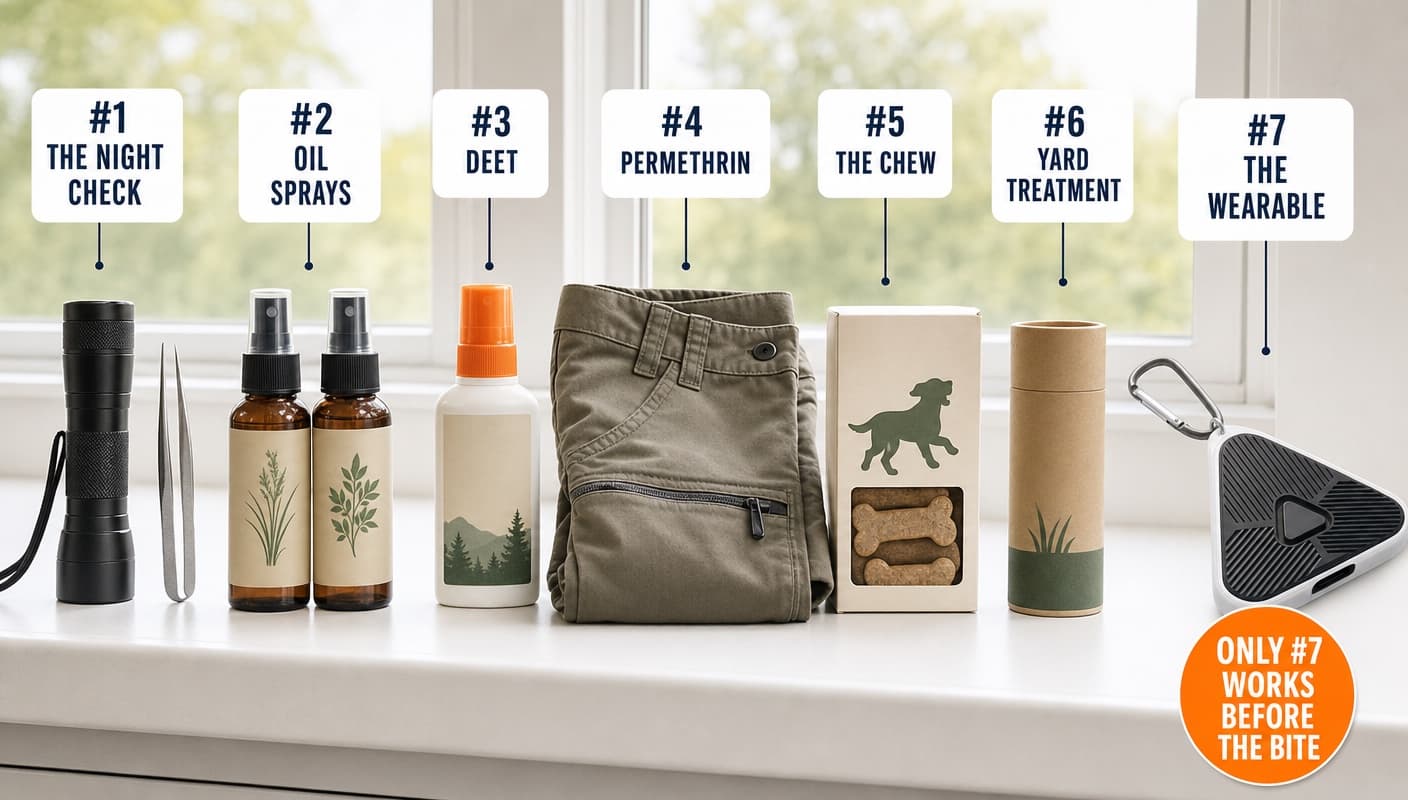
#1Nothing, or “we check them at night”
When I ask a family what they use, the most common answer this year is a flashlight after bath time. Sometimes it comes with confidence. More often it comes with an apology.
Let me be fair to the check, because I do them professionally: a careful nightly check matters, and finding a tick early genuinely changes what a bite can become. Keep checking. Nothing on this list replaces it.
Here is what the check cannot do. The bite itself is painless. The tick's saliva numbs the skin on the way in, and an unfed tick at a waistband looks like a freckle. By the time a tick is easy to find, it has usually been feeding for days.
No parent misses that through carelessness. The animal is built to not be found.
One Tuesday this June, my clinic log showed nine removals before lunch. Most of those families checked every night. The checks weren't failing. They were counting ticks that had already boarded.
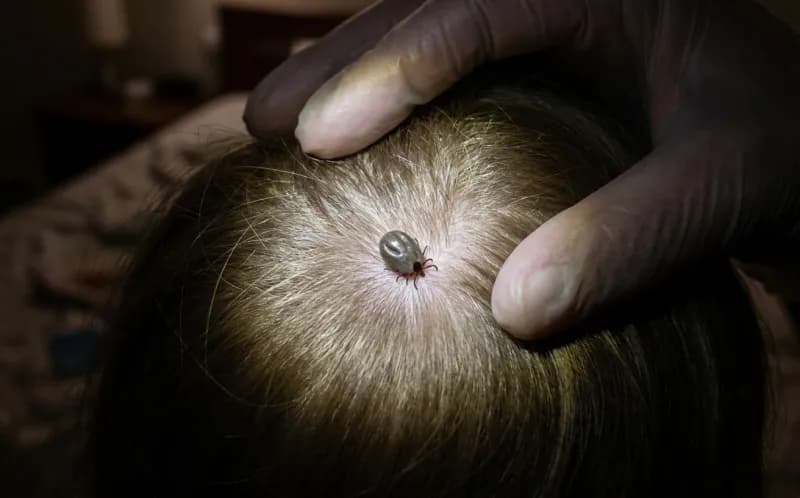
✗Verdict: a night check counts ticks. It doesn't stop one. Do it anyway, and never let it be the whole plan.
#2“Natural” essential-oil sprays
My pregnant patients and new parents almost always start here, and I understand exactly why. No warning label. Smells like a garden. Nothing scary soaking in.
For a patio hour, genuinely fine. Citronella, lemongrass, peppermint: pleasant on the skin and easy on a toddler who fights the spray bottle.
The trade-off is the clock. Most botanical sprays are not EPA-reviewed for effectiveness, and the studies that exist measure their protection in minutes. Around thirty of them.
Nobody reapplies a spray every half hour. Not at camp, not at a cookout, not once in nineteen summers of my asking.
✗Verdict: reapply every thirty minutes, or accept that it's cologne.
#3DEET and picaridin sprays
An honest entry, and I say it plainly in the room: DEET works while it's on the skin. Health bodies call it safe when it's used correctly. If a spray is going to be the whole plan, this is the spray.
The fine print is what fills my afternoons. It sits on skin, and a share of it absorbs. That's the reason for “apply sparingly,” for keeping it off small hands, for washing it off at night. Babies under six months: off the table entirely.
My pregnant patients get pointed toward alternatives first, and they're the ones who keep asking me for the option without a warning label. For years I had nothing to offer them.
Then the clock, again. Protection fades in roughly four hours. A camp day runs nine, and no counselor on earth is re-spraying twenty kids at noon. The hours between wear-off and pickup belong to the tick.
Families rarely quit DEET because it failed them. They quit because it's a 6am ritual, every head, every day, all season, and the afternoons still leak.
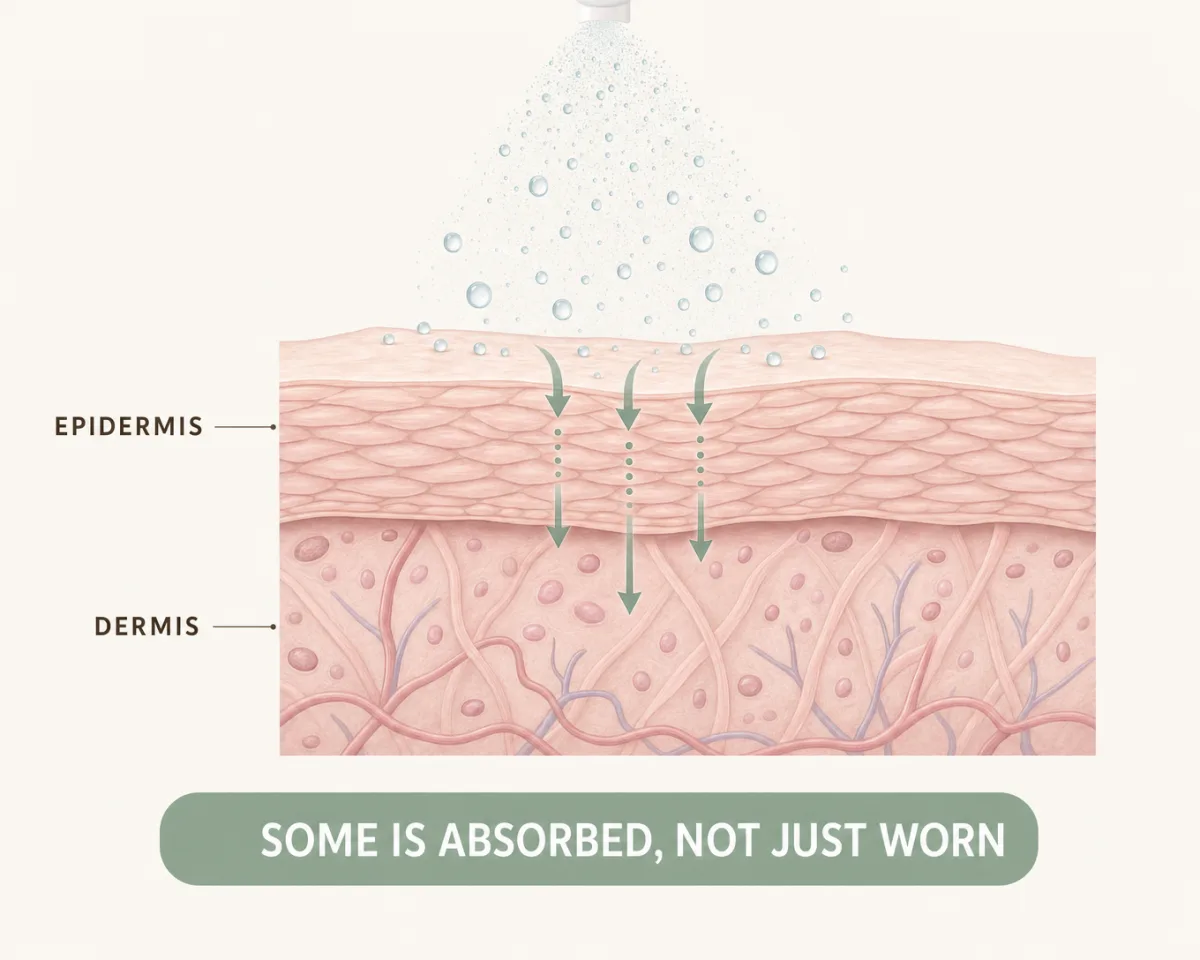
"Our skin is incredibly absorbent, especially our children's."
✗Verdict: it works while it's on. By the afternoon it isn't on, and a season is three months of afternoons.
#4Permethrin-treated clothing
The strongest traditional repellent on the list, and the serious hikers in my practice swear by it. Treat boots, socks, and pant legs, and ticks that touch the fabric get knocked back on contact. For one adult on a trail, I don't argue.
For a household, the fences around it do the deciding. It washes out, so re-treating every six weeks becomes a chore you own until October.
And the protection lives on the clothes, and only the clothes. The moment your son changes into swim trunks, it stayed behind in the hamper. The untreated little sister standing next to him never had any.
Then the warning that ends the conversation in half my exam rooms: permethrin is lethal to cats, contact included. A treated shirt drying over a kitchen chair is a live hazard in a house with a cat on the counters.
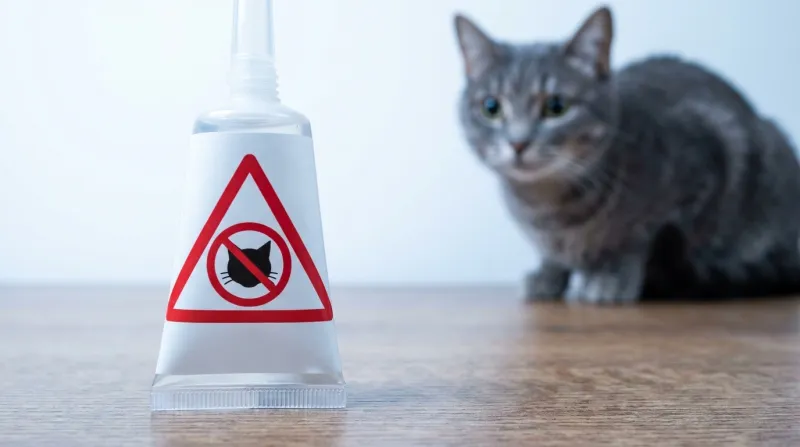
"NOT FOR USE ON CATS means none, never, ever."
✗Verdict: excellent on the fabric it's on. Families don't live in one outfit, and cats can't live with it at all.
#5The dog's monthly chew
Almost every dog owner in my practice believes the chew has the tick problem handled. What it actually handles is narrower, and the difference lands on your furniture.
First, the fair part: the chew is real medicine doing its stated job. A tick that bites the dog dies. Keep whatever your veterinarian prescribed; that's their lane and I stay in mine.
But Cornell's veterinary college has documented the rest of the sentence: oral preventatives don't stop ticks from attaching. The bite comes first. Then the kill. Nothing about the dog repels anything.
The retriever forums say it plainer than Cornell does: “on NexGard religiously and still pulling engorged ticks off.”
A veterinarian colleague has a name for the corollary: the tick taxi. The ticks that don't bite the protected dog ride his fur through the front door and get off near something smaller and warmer. The dog is covered. The house never was.
And the FDA made this whole chew class carry a seizure warning back in 2018; ask your vet about the class by name, isoxazolines.
The stakes of that first bite climbed this decade. Alpha-gal, the red-meat allergy one unfelt bite can trigger for life, took its first life on record this spring.
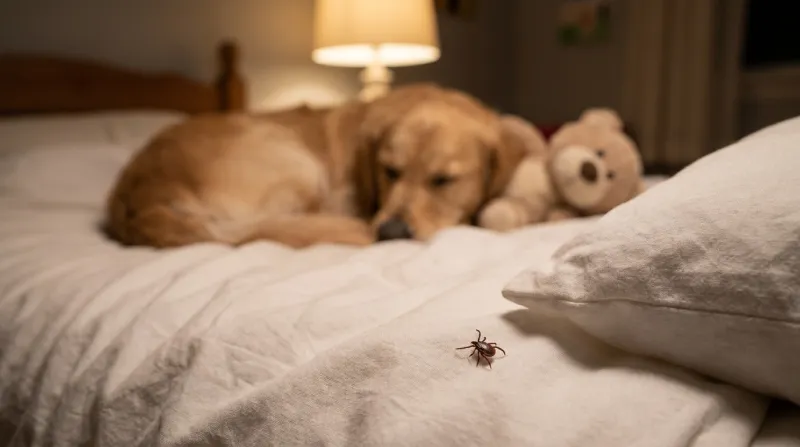
"150 lbs of venison in my freezer... No more. Due to a tick."
✗Verdict: the chew avenges the bite. Nothing in that bottle prevents one.
#6Auditing the yard instead of the child
Here's the slot that surprises people, because almost nobody in my exam rooms has heard of it, and it outranks everything above.
Two versions. The audit: drag a light-colored towel slowly across your lawn, edge to fence line, and count what grabs on. Field researchers have counted ticks this way for a century.
The treatment: a service lays a pesticide barrier around the property every few weeks, and it genuinely knocks the yard's population down.
I rank it this high because it's the first thing on this list that tells you the truth. The audit costs a towel and ten minutes, and it ends the “our yard is probably fine” argument on the spot.
This year it usually ends it the hard way. Two mild winters in a row killed almost nothing, the spring hatch was the biggest ever measured, and my intake forms have stopped saying trailhead.
They say swing set. Sprinkler. The strip of grass between the driveway and the fence. The sentence I hear across the desk, family after family, almost word for word: “But we didn't go anywhere.”
Now the ceiling, and it's the reason this still isn't the winner. Everything this option knows and everything it treats stays at one address.
Day camp was never audited. The soccer sideline was never treated. Grandma's backyard, the friend's creek, the campsite in August: all outside the barrier. You can make the yard honest. Your child doesn't stay in the yard.
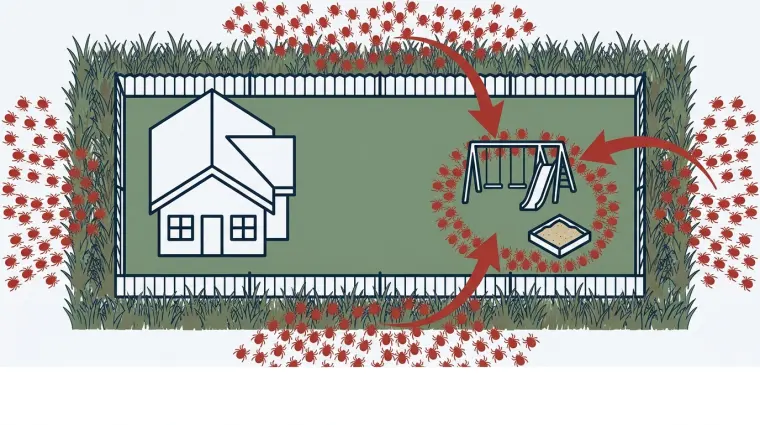
◐Verdict: run the audit this weekend, treat if the towel scares you, and remember the bite that matters may be waiting at an address you don't control.
#7The before-contact layer: an ultrasonic wearable
Look back at the list. Every rank above this one either goes to work after the tick has reached your child or stays home when your child leaves.
That gap is where this season's damage happens, and this is the only entry that lives there: before contact, everywhere they go.
The biology, in the plain English I use across the desk. A tick can't see you and can't chase you. It hangs on a blade of grass at knee height and reads heat, breath, and footsteps through one sensor in its front legs. That sensor is the radar. The entire hunt runs through it.
The clip is a small ultrasonic wearable that fills that radar with static. The maker calls it Sensory Static, and for once the marketing name is just a description. A child wearing one reads as empty air. The tick turns back at the shoe, because as far as its radar can tell, nobody walked by.
In a real house, that means nothing on skin, so there's nothing to absorb, reapply, or keep off small hands. Nothing the cat can't share a couch with.
One clip per wearer: the backpack, the waistband, the stroller frame, the dog's collar. Eleven grams. Waterproof through sprinklers and lake days. Charge it and forget it for the season.
Take it on its own first, before it stacks with anything. With nothing else on the child, no spray under it and no barrier around it, it still does the whole job. That is what none of the ranks above can say. This is not a layer you add to a plan; on its own it is the plan.
And then it stacks. Whatever ritual you already run, the clip rides along into the nine camp hours no spray survives and the acre no yard barrier reaches.
Now the objection, because my sharpest patients raise it before I do: ultrasonic has a reputation. The forums call the category “snake oil” and mutter about “fools and money,” and a shelf of fifteen-dollar clones earned every word.
I won't argue you out of that skepticism. I brought the same skepticism to it myself.
Here is what moved me. A wearer who ran the same ground twice, two weeks apart: “Worn same place two weeks before purchase: 25 tick bites. After: not one.”
The tree crew that works this county's brush forty hours a week bought clips for the whole crew. Their foreman was in my clinic for a wasp sting and put it flat: “nobody's had one on them since.”
And the clips I put on my own kids' backpacks in April, before the log went vertical. My three spent three days this summer in the county I'd been reading case reports out of. I combed them each night expecting the worst. Zero.
The clip I use, and the one this ranking is about, is TickBlock, from Vanoir. The reason I'll put my name this close to a category with this reputation is what the maker strapped to it: a 365-day money-back guarantee.
Wear it a full season. Still pulling ticks off? Every cent comes back. Nobody attaches a promise like that to the worst tick season on record unless the clip holds. That dare answers the snake-oil question better than I can.

"Honestly, I don't believe in this kind of methods, but this product surprised me. No ticks."

✓Verdict: keep whichever ritual you trust; this is the layer that's on them all day. It takes the top slot because it's the only defense working before the bite.
The seven verdicts in one place, worst to best, the way I'd scribble them on the back of the pamphlet:
The seven verdicts · worst → best
| #1 | Nothing / the night check | ✗ Counts ticks. Doesn't stop one. |
| #2 | Essential-oil sprays | ✗ Pleasant, and gone in about thirty minutes |
| #3 | DEET / picaridin sprays | ✗ Work while they're on. Off by afternoon. |
| #4 | Permethrin clothing | ✗ Guards the fabric. Lethal around the cat. |
| #5 | The dog's chew | ✗ Avenges the bite. Prevents nothing. |
| #6 | Yard audits + treatments | ✗ Honest about the yard. Camp is another address. |
| #7 | TickBlock, the before-contact clip | ✓ On them all day, working before the bite |
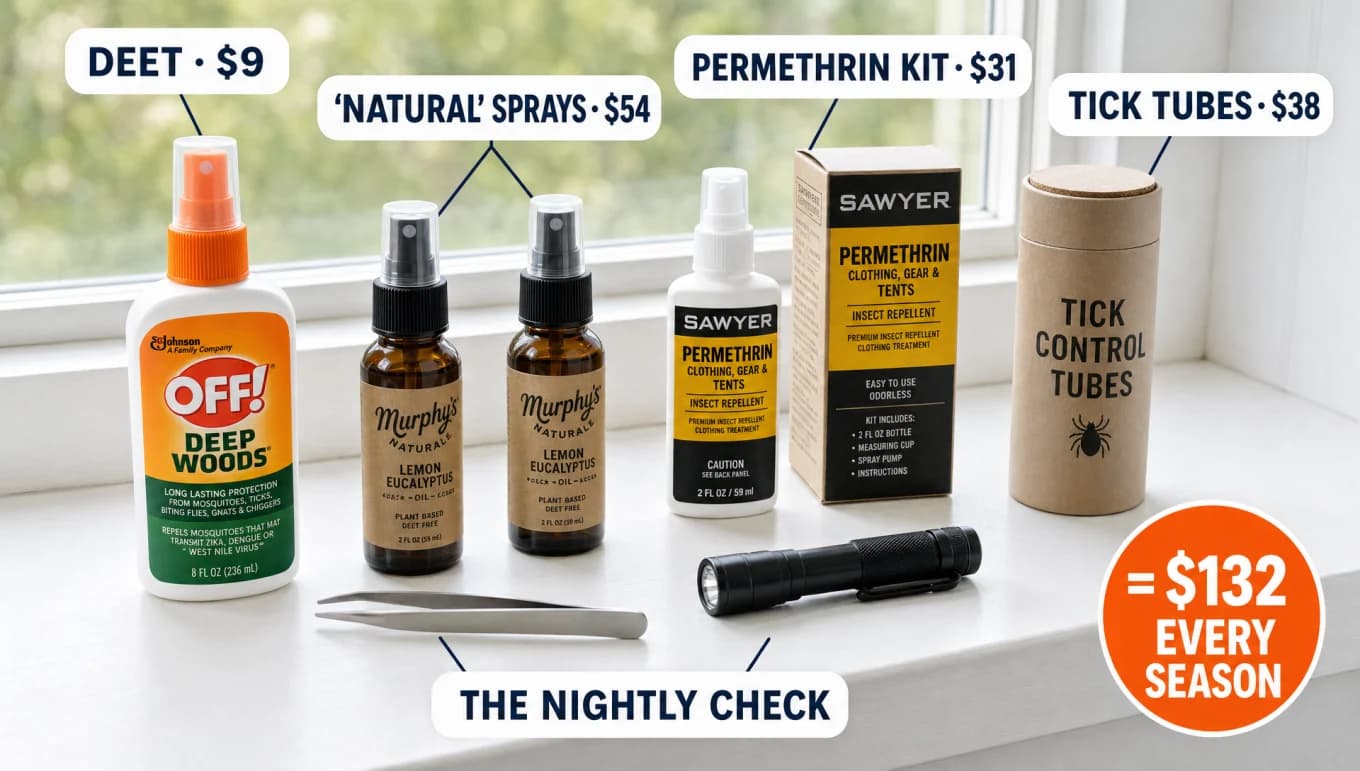
Price it the way I finally did at my kitchen table. The standard arsenal runs about $132 a season, permethrin re-treats included, and it still leaves the afternoons open.
One urgent-care visit to remove and test a single tick costs more than the whole 4-pack. Four clips, about twenty dollars each, once, covering the season before contact.
THE TOP PICK, PRICED BY HOUSEHOLD
One clip per wearer. Pick the pack that covers your house.
Every pack ships free in the US with the 365-day money-back guarantee and an Emergency Tick-Removal Kit in the box.
You're saving $200.00 on this order
Pack picked above — checkout takes a minute · Free US shipping
- Chemical-FreeNothing on skin
- 365-DayRepel or refund
- SilentTo people & pets
Peak-season demand — multi-packs are moving fast
Stock, honestly: every 4-pack restock since June has cleared in days. If the buttons above load a checkout, it's in stock right now.
The 365-day dare
Rank it yourself, on your own season. Clip it on for the camp weeks, the yard, the cousins' place, the vacation trail, all of it.
Still pulling ticks off anyone wearing one? Email the maker and every cent comes back. No forms, no phone maze, no restocking fee.