Dog Health · 6 min read
Does Your Dog's Monthly Chew Actually Repel Ticks? 6 Things the Label Doesn't Spell Out
If you're on a chew religiously and still pulling ticks off your dog, you're not doing it wrong. Here's what oral tick preventatives actually do, and what they were never designed to do.


You give the chew on the first of every month like clockwork. And you're still finding ticks on your dog after a walk. That combination makes a lot of owners feel like they're failing at something simple.
You're not. The chew is doing exactly what it was built to do. The problem is that what it was built to do isn't what most owners assume they're buying.
Here's the part the packaging tends to skip, and why some households have started handling the tick question a different way.
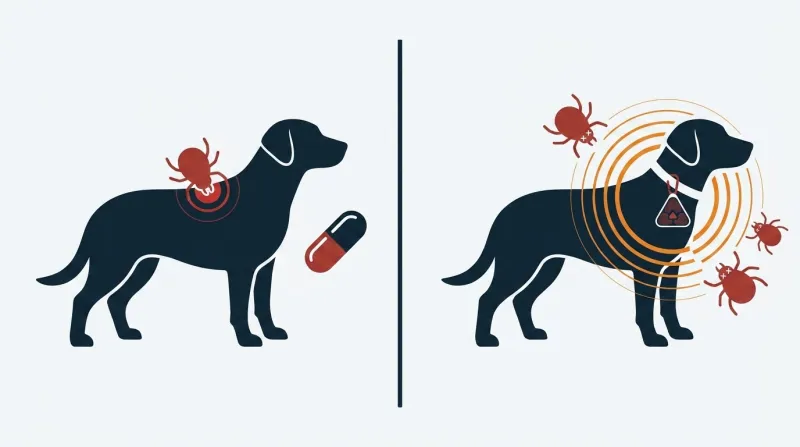
1. Your chew doesn't repel ticks. It waits for the bite
This is the single fact that reframes everything. Oral tick preventatives (NexGard, Simparica, Credelio, Bravecto) do not stop a tick from getting on your dog. Cornell's veterinary college says it plainly: these products “do not prevent tick attachment.”
The way they work is that the tick has to bite your dog and drink his blood, which is what carries the medicine that kills it. As one vet pharmacy puts it: “when a tick bites your dog, they ingest the medication and then die and fall off.”
So a tick crawling on your dog, or already latched, isn't a sign the chew failed. That's the chew working as designed. The bite is a required step.
2. By the time it works, the clock has already started
Killing a tick after it bites still matters. But it's a race, and the chew doesn't always win it cleanly.
A tick generally needs to stay attached for 24 to 48 hours before it can transmit the bacteria that cause Lyme disease. The faster it's killed, the better. But a controlled study found the oral products weren't fast enough to block disease transmission in every case, protecting in roughly a third to two-thirds of infected-tick challenges, while a true repellent blocked 100%.
None of that means the chew is worthless. It means “kill after the bite” leaves a window that “never let it bite” doesn't.
3. He can still carry live ticks into the house
Here's the knock-on effect owners feel most. Because the chew only acts once a tick has bitten *your dog*, a tick can ride in on his coat perfectly alive, then end up on the couch, the rug, or a kid's bed before it ever settles on him.
That's the moment a dog-only solution stops being just a dog problem. Protecting the dog and protecting everyone the dog sleeps near are two different jobs.

"Our dog is on NexGard religiously and we were STILL pulling engorged ticks off him. The chew treats the bite. It repels nothing."
4. The only thing that stops the bite is a repellent, and most repellents come with strings
If you want to actually keep ticks from latching on, you need a repellent, not a kill-after-bite product. Permethrin-based topicals and collars do repel.
The catch: permethrin is toxic to cats, so it's a non-starter in a home with a cat, and repellent chemicals aren't something most people want soaking into a dog the kids wrestle with all day. So owners end up back in the same box: the thing that repels is the thing they can't safely use everywhere.
5. How ticks find your dog, and the newer approach that stops it earlier
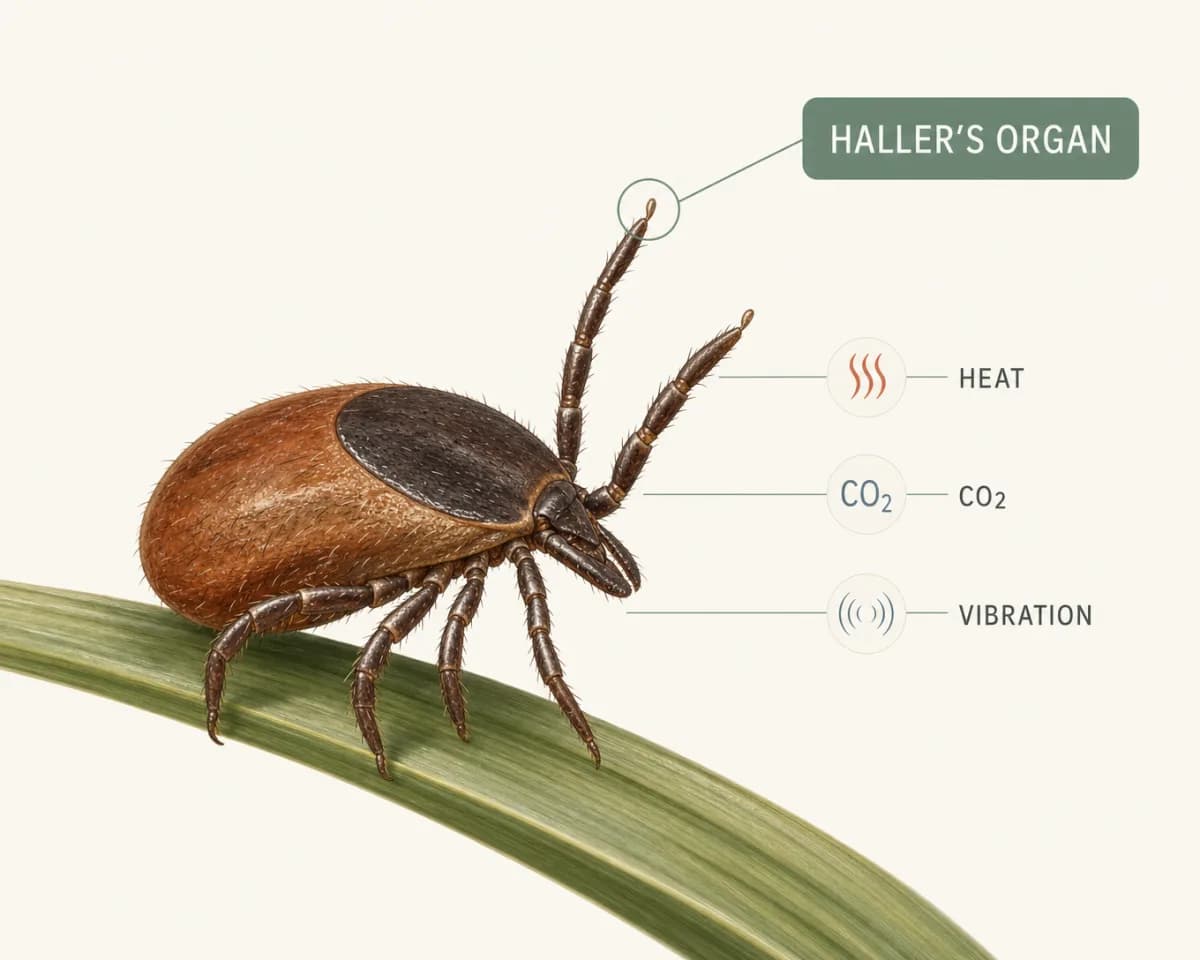
A tick doesn't chase. It waits on a blade of grass with its front legs out, reading heat, the carbon dioxide your dog breathes out, and the vibration of movement through a sensor called the Haller's organ. That's the radar it uses to decide when to grab on.
Every chew and topical works *after* that radar has already succeeded. A newer approach targets the radar itself: a small ultrasonic clip on the collar runs a frequency that scrambles that sensor, so the tick can't lock on in the first place.
Nothing goes into the dog, nothing on the coat for the kids or the cat to touch, which is exactly why it appeals to the households the chemical options keep boxing in.
6. What to look for if you want to actually block the bite
If you go looking for something to pair with (or replace) the chew, these are the things that separate a real option from a marketplace gimmick, whoever you buy from:
- It repels *before* the bite, instead of killing after it
- Nothing on the coat and nothing in the dog, so it's safe around the cat and the kids at the same time
- Waterproof, so a swim or a rainy walk doesn't end its day
- One thing that covers the whole household, not a separate risky product per animal
- A real company with a real guarantee. The category is full of $15 clones that disappear at refund time