
Hello, I'm Dr. Sarah Chen — a board-certified dermatologist writing in a contributing-editorial capacity.
Over the last fourteen months, a small working group of dermatologists across three US cities has been quietly testing a new approach with fair-skinned patients.
These are patients who gave up on tanning beds after the 2024 FDA reclassification.
They also gave up on self-tanners after the third orange-palm incident.
- Tanning bed regret after years of UV exposure
- Spray tans that age the face by five years in candid photos
- Self-tanners that streak across the wrists and elbows
- A 'carrots in a capsule' supplement that did nothing
- Winter skin that reads gray no matter the bronzer
- Photo-anxiety in every group shot from October to April
Real Biochemistry, Not TikTok Trends
Every patient in the cohort had tried — and quit — at least three of those options.
What the working group landed on instead has a clinical name almost nobody uses: biomimetic pigmentation.
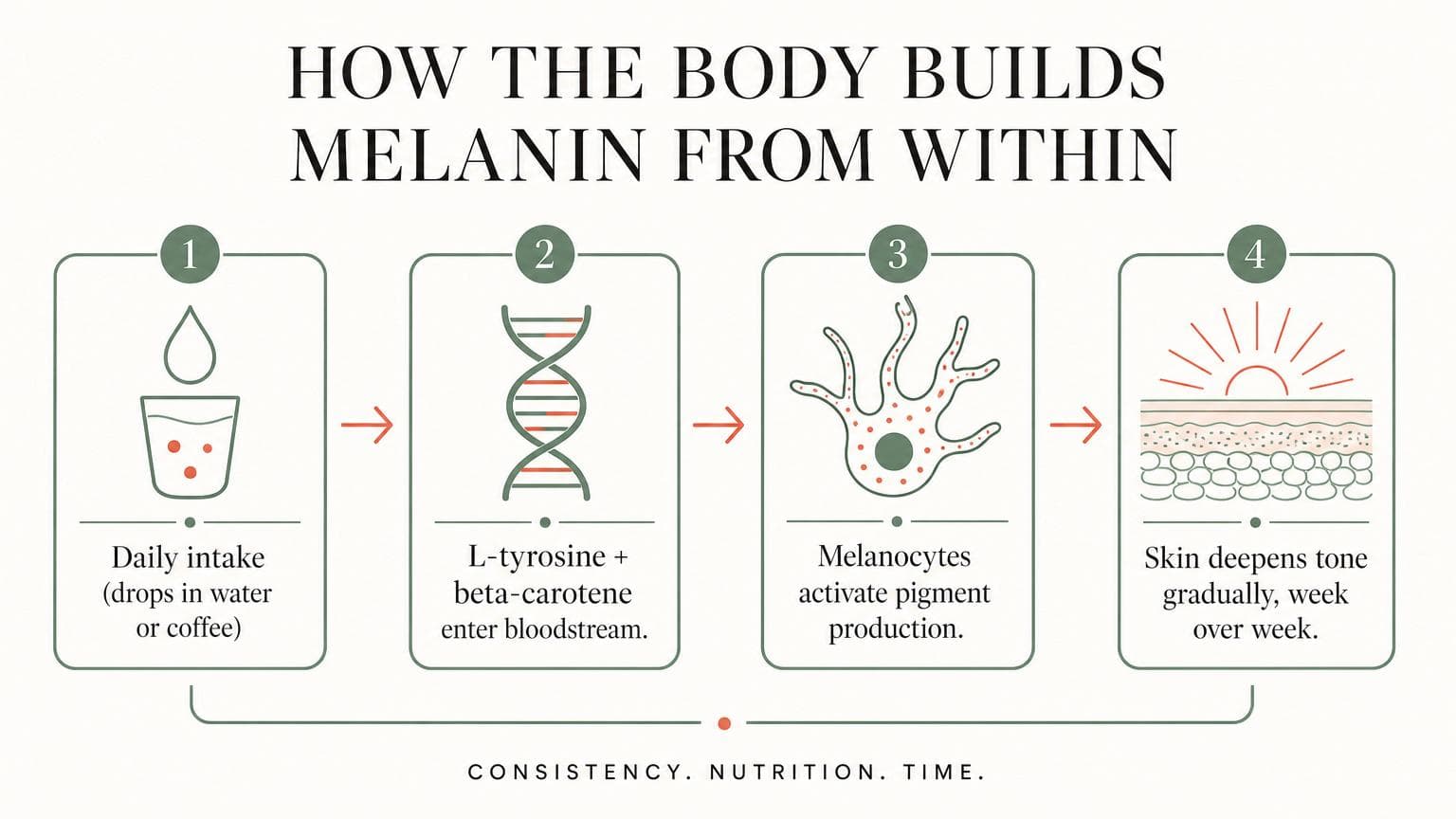
Translated out of jargon: giving the body the precise raw materials it already uses to produce melanin from within.
No UV. No DHA. No topical pigment sitting on the surface to streak and oxidize.
Here is the science — and why most patients are hearing about it before their derms bring it up. Summer 2026 is the season the category breaks mainstream.
1. Where Most Articles About 'Natural Tanning' Stop — And Where The Real Story Starts
Open any wellness article about pale winter skin and the explanation runs the same path.
Eat more carrots. Get a bit of midday sun. Take a Vitamin D supplement.
The advice is not wrong. It is just incomplete by a factor of three.
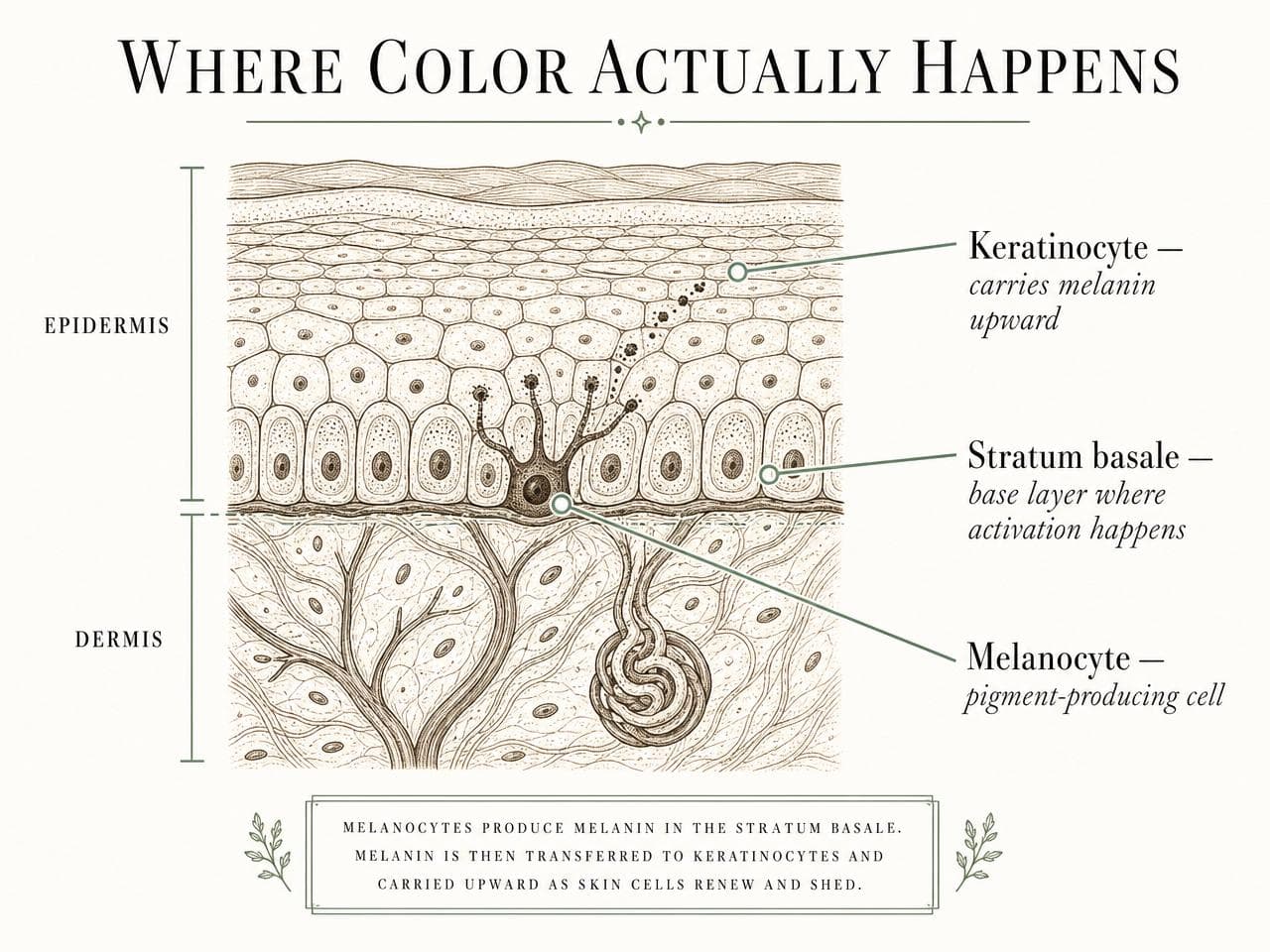
Visible skin color is produced by cells called melanocytes in the basal layer of the epidermis.
They manufacture melanin, package it into membrane-bound granules called melanosomes, and distribute them up through the skin.
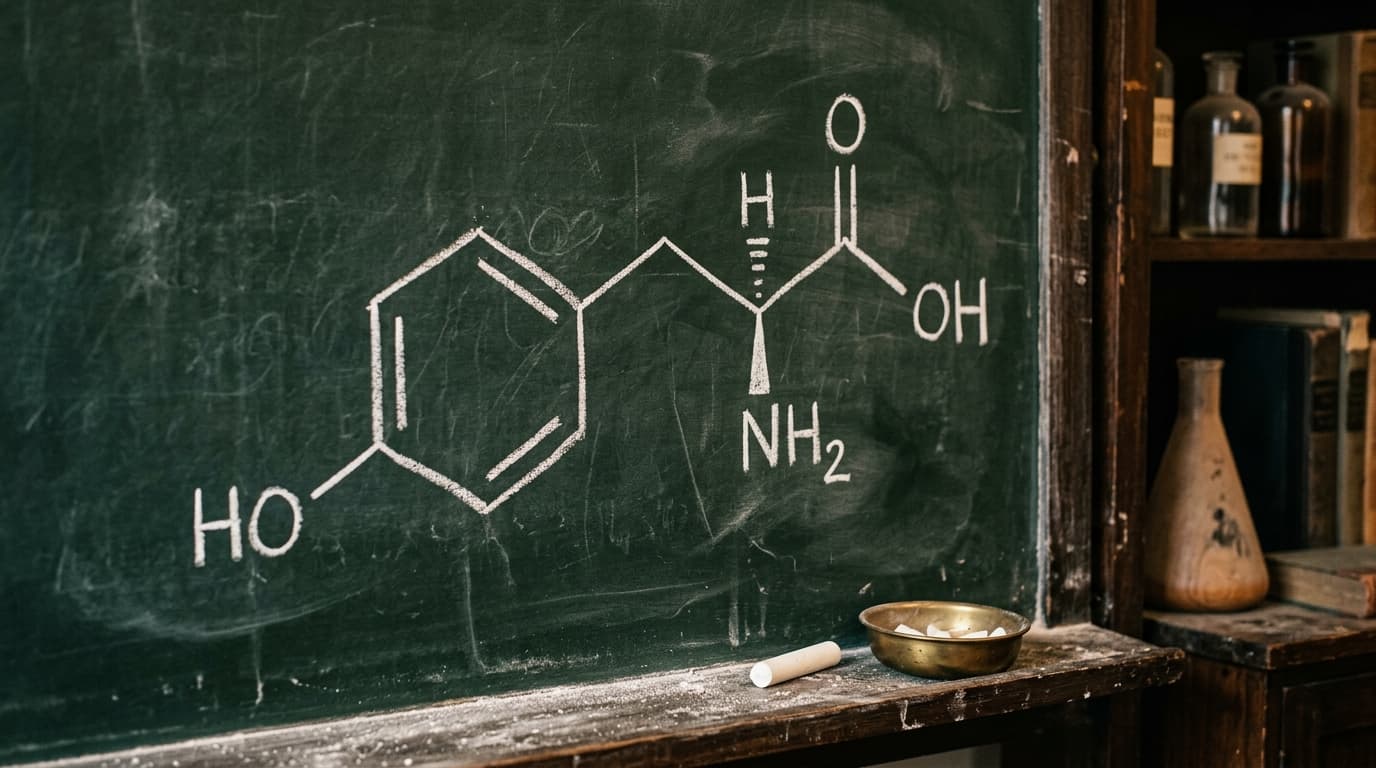
The rate-limiting enzyme in that entire process is tyrosinase.
Tyrosinase converts the amino acid L-tyrosine into intermediates that polymerize into eumelanin (brown-black pigment) and pheomelanin (red-yellow pigment).
"A tan is a defensive bruise. The skin is producing pigment precisely because the cells underneath have already taken damage."
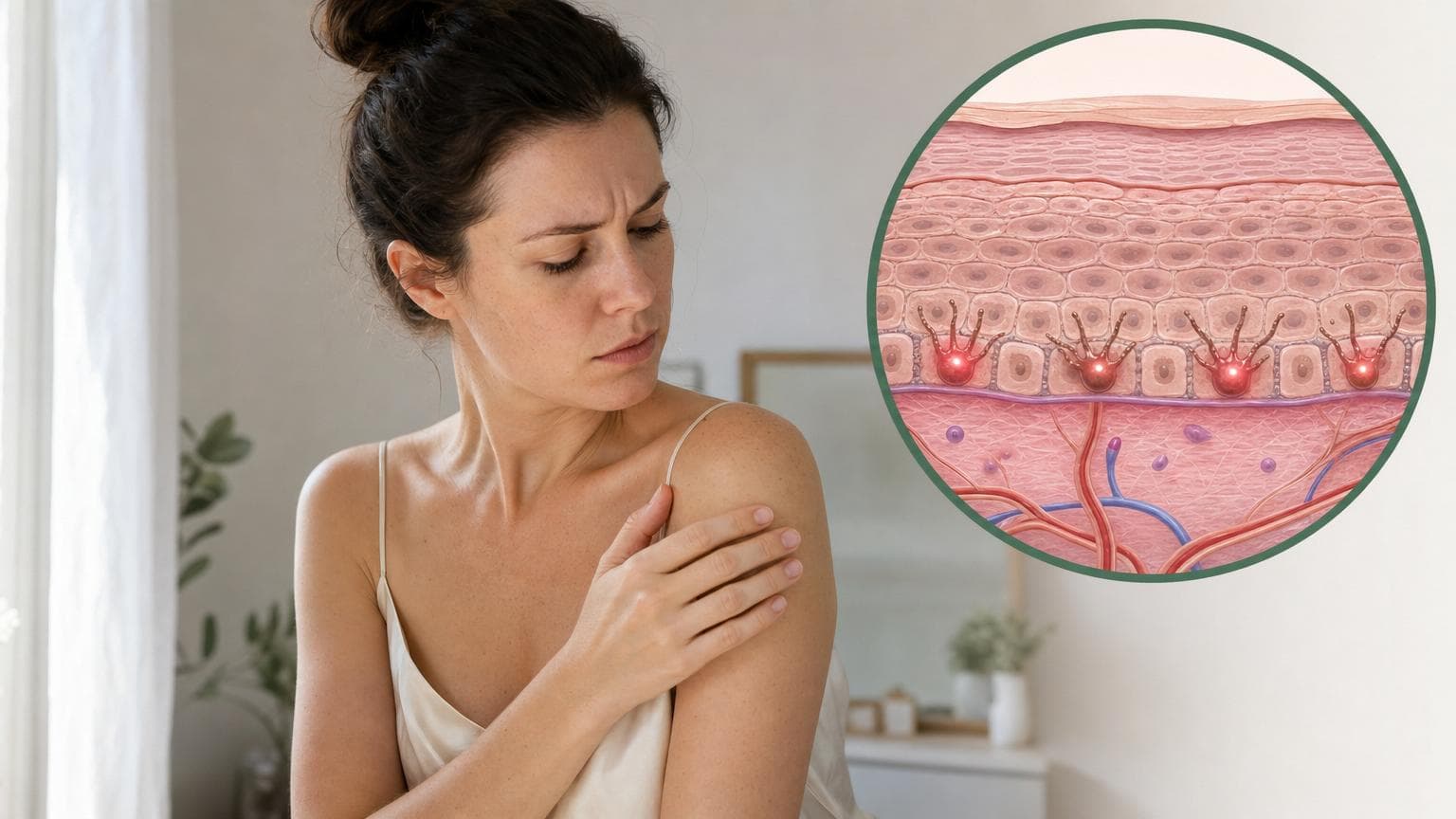
When UV hits the skin, melanocytes upregulate to absorb subsequent UV photons before they damage DNA.
That is what a tan is — a defensive bruise.
The pathway is the same whether the trigger is UV or biochemical.
Which means in theory the body can produce a visible tan with no UV at all — if you can supply the precursors at sufficient circulating levels.
In practice, almost nobody does. There are two specific bottlenecks.
60-day money-back guarantee · Free US shipping
2. Bottleneck One: The Dietary Beta-Carotene Gap
Beta-carotene is the orange-pigment carotenoid in carrots, sweet potatoes, butternut squash, and red bell peppers.
When ingested, it deposits into the lipid layers of the skin as a warm golden undertone.
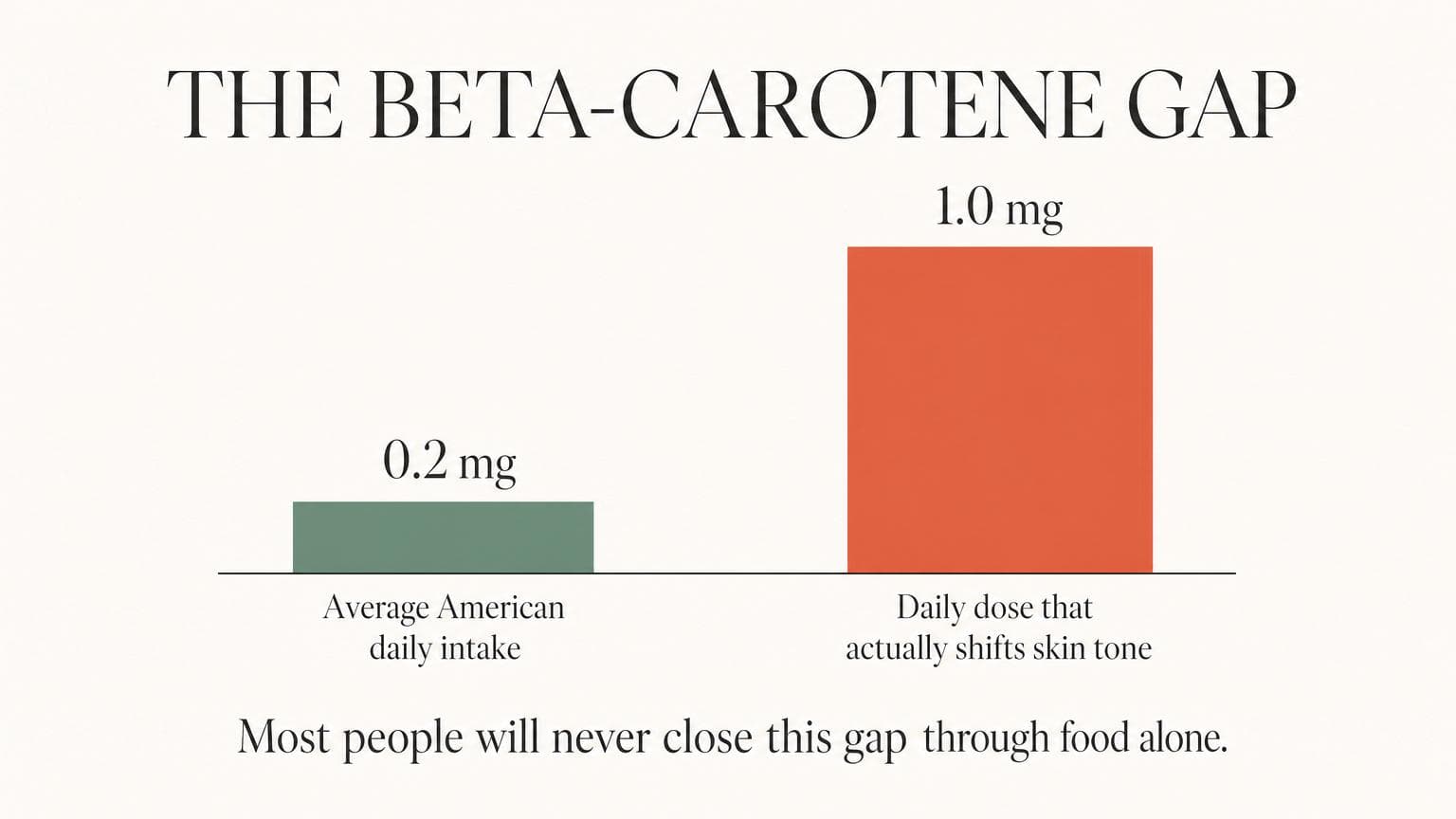
The visible-deposition threshold for fair-skinned adults sits at 0.8 to 1.5 mg of sustained daily intake over four to six weeks.
The average American adult consumes 0.18 to 0.22 mg daily across all food sources.
That gap — roughly five-fold — is the first bottleneck.
5×
the gap between average dietary beta-carotene intake and the dose that visibly shifts skin tone
— USDA dietary intake data · clinical pigmentation thresholds
Closing it through food alone would require a large carrot, a cup of cooked sweet potato, and a serving of leafy greens — every single day, indefinitely.
Most adults do not.
Most adults also do not absorb dietary beta-carotene efficiently because fat-soluble carotenoid uptake depends on adequate dietary fat in the same meal.
Low-fat dieting patterns specifically disrupt this.
A 1 mg daily dose, paired with the right cofactors, bypasses the gap.
The skin reads warmer within 14 to 21 days.
60-day money-back guarantee
3. Bottleneck Two: The L-Tyrosine Substrate Shortfall
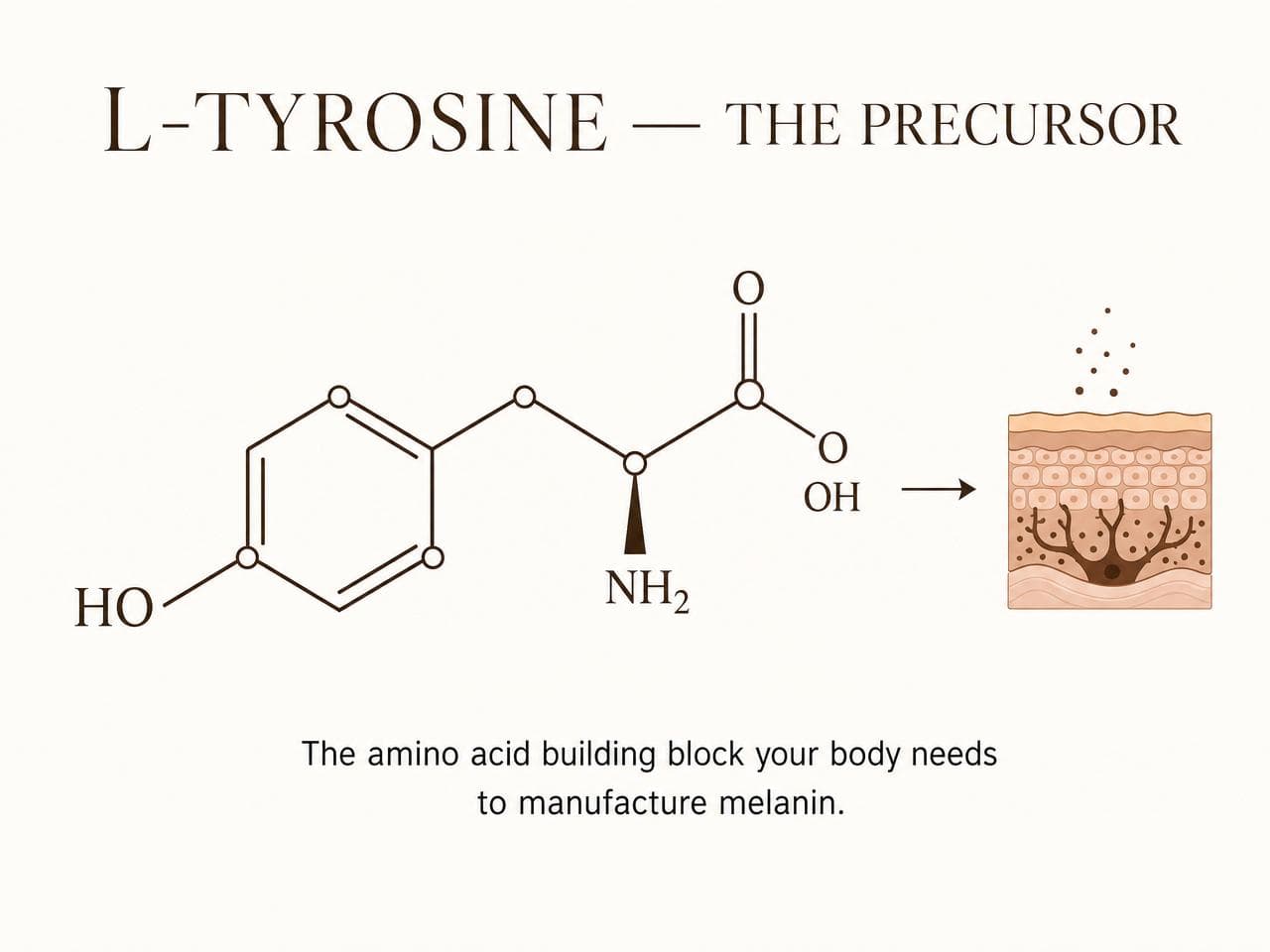
The second bottleneck is more interesting clinically.
It is the one almost no over-the-counter tanning supplement addresses correctly.
L-tyrosine is the amino acid substrate that tyrosinase converts into melanin.
Circulating tyrosine on a typical diet is sufficient for basal melanin production.
It is insufficient for upregulated pigment synthesis without UV stimulation.
In other words: enough to maintain your winter baseline, not enough to push the pathway into the upregulated state that produces a visible tan.
Most cheap tanning supplements skip this entirely.
They load up on beta-carotene, add Vitamin A for marketing, and call it a formula.
The result is a slow yellow-orange tint without the warm brown undertone that makes a tan read healthy.
A 6 mg daily dose of L-tyrosine, taken consistently, supplies the additional free substrate the melanocytes need.
The result: a balanced pigmentation shift — warm enough to read as tan, brown enough to read as natural.
Full ingredient ratios published on label
4. The Biomimetic Protocol: What Dermatologists Are Actually Recommending
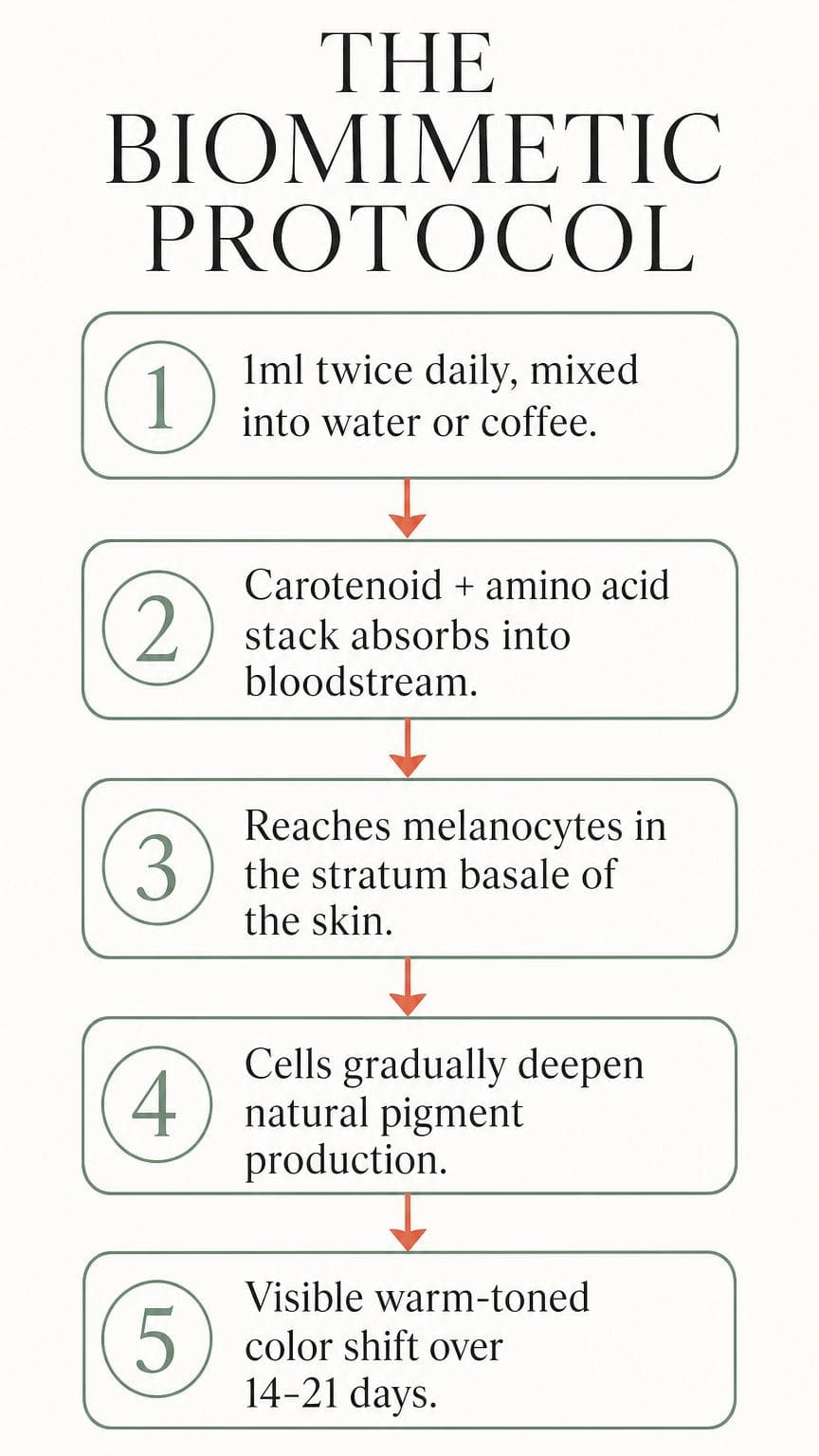
The protocol the working group settled on reduces to a single short list.
The components are not novel. The ratios and the delivery form are.
The active stack pairs 6 mg of L-tyrosine with 1 mg of beta-carotene daily.
Supported by 0.7 mg lutein (antioxidant protection for developing pigment).
22.7 mg Vitamin C (melanin synthesis cofactor + brightening agent).
0.92 mg Vitamin B6 (cofactor for enzymatic conversion).
3.3 mg Vitamin E (lipid-layer protection where carotenoids deposit).
The protocol calls for splitting the dose into two daily administrations to keep substrate levels stable.
Delivery form matters more than most patients realize.
Encapsulated tablets routinely under-deliver fat-soluble carotenoids because of variable disintegration timing.
The working group converged on a liquid pigment-precursor concentrate — administered as drops, mixed into a morning beverage.
The liquid format delivers the active stack pre-emulsified, which lifts effective bioavailability into a range where the dose actually matches the label.
The product on the receiving end of this protocol is a brand called Vanoir.
It is the first formulation in the category to publish a ratio that aligns with the working group's recommendations.
60-day money-back guarantee
5. What Vanoir Actually Delivers — And Why The Format Matters
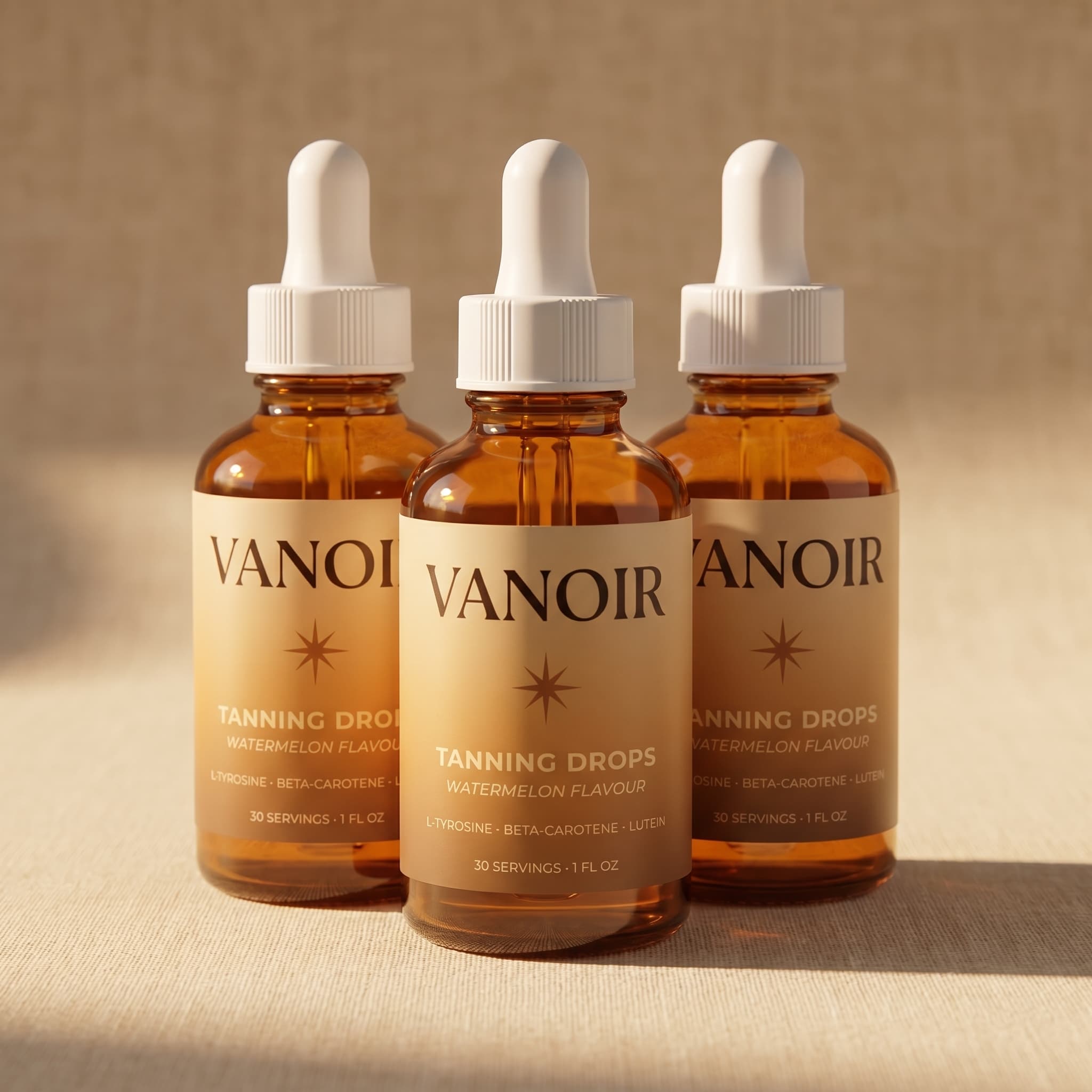
Vanoir is a small amber dropper bottle.
One milliliter, twice daily, mixed into water, iced coffee, or a smoothie.
The taste is a faint watermelon — present but unobtrusive in coffee.
One bottle covers roughly thirty days at the recommended dose.
Vanoir is the only brand in this category to publish the full ratio on the label.
Beta-Carotene 1 mg · L-Tyrosine 6 mg · Lutein 0.7 mg · Vitamin C 22.7 mg · Vitamin B6 0.92 mg · Vitamin E 3.3 mg per serving.
Those numbers map directly onto the dermatology working group's protocol.
Drops+ doesn't publish its doses. Sorelle publishes them but pads the marketing with ingredients that aren't in the bottle. Vanoir publishes the protocol-matching ratio with no proprietary blend obscuring the dose. No animal-derived ingredient. Third-party tested for purity and label accuracy.
The pricing is the other piece patients tend to find surprising.
30-Day Trial (1 bottle): $29.99 — fifty percent below MSRP.
Summer Starter — Most Popular (Buy 2 Get 1 Free, 3 bottles): $49.99 — $16.66 per bottle.
Full Summer — Best Value (Buy 3 Get 3 Free, 6 bottles): $74.99 — $12.49 per bottle, the lowest per-bottle pricing the brand has ever offered.
For comparison: a monthly tanning bed membership runs $40-$90. A single airbrush spray tan averages $45-$90 per session — and fades in seven to ten days.
The Active Stack, Ingredient By Ingredient
L-Tyrosine
6 mgThe amino acid substrate that tyrosinase converts into melanin. Pushes pigment synthesis into the upregulated state that produces a visible warm undertone.
Beta-Carotene
1 mgThe orange-pigment carotenoid that deposits into the lipid layers of the skin. At 5× the average dietary level, it produces a visible golden undertone within 14-21 days.
Lutein
0.7 mgA carotenoid antioxidant that protects the developing pigment from oxidative degradation. Why the resulting color reads warm and luminous rather than flat and chalky.
Vitamin C
22.7 mgA cofactor for melanin synthesis and a brightening agent in its own right. Stabilizes the carotenoids during gastrointestinal absorption.
Vitamin B6
0.92 mgA cofactor for the enzymatic conversion steps. Without adequate B6, L-tyrosine doesn't convert efficiently into downstream pigment intermediates.
Vitamin E
3.3 mgProtects the lipid layers where the carotenoids deposit. The reason the pigmentation shift holds steady rather than oxidizing into a duller tone.
Summer Starter · $49.99 for 3 bottles · Buy 2 Get 1 Free
6. What The Clinical Timeline Actually Looks Like, Day By Day
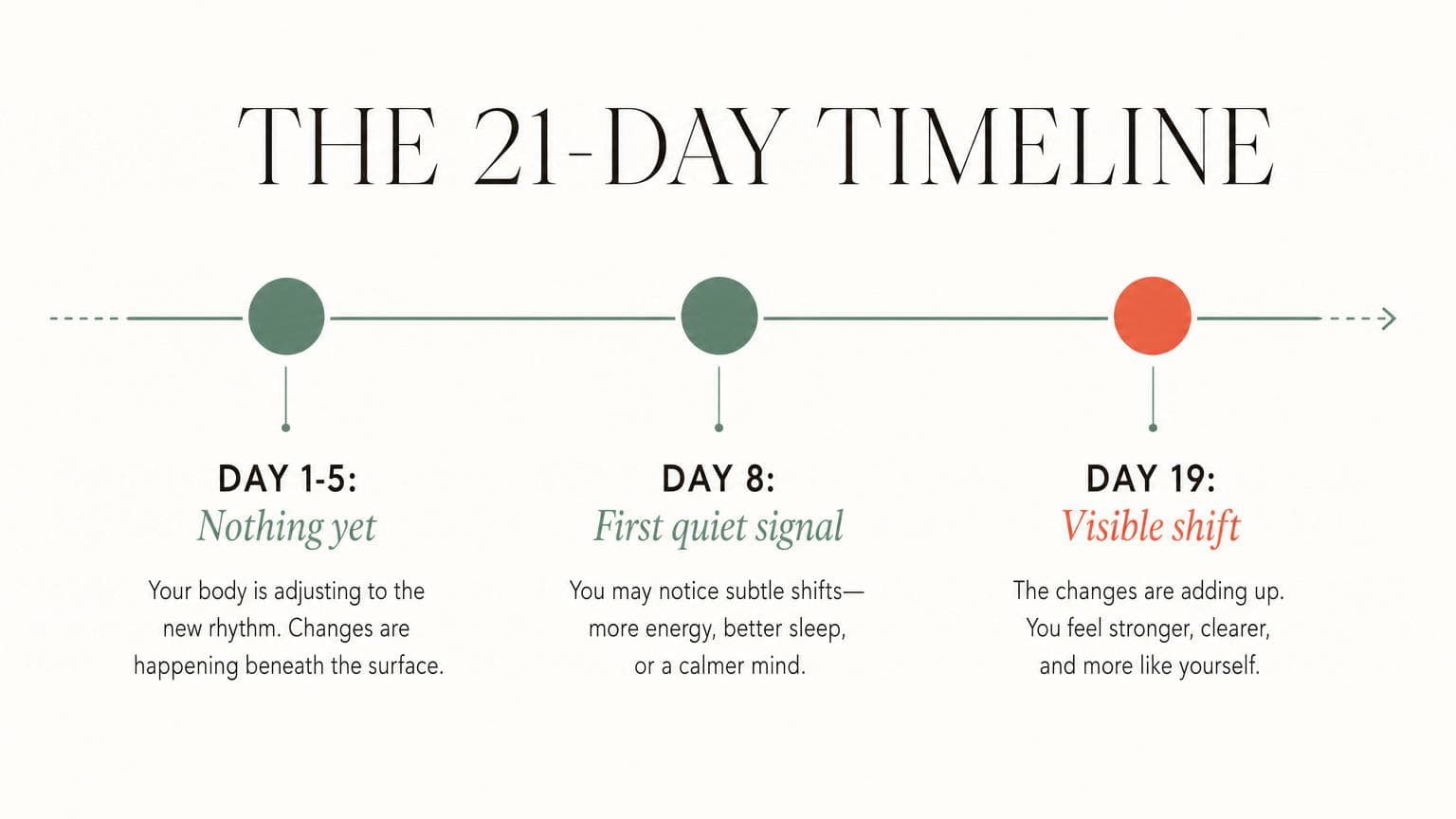
The pigmentation pathway operates on its own clock.
Patients ask repeatedly how fast the protocol works.
The answer is consistent across the cohort.
Days 1-5: nothing. Beta-carotene reserves filling. Circulating L-tyrosine climbing toward threshold. This is the most common point at which patients quit.
Days 6-12: the inflection. A coworker says 'you look really rested' on a day the patient slept four hours. A friend asks if the patient changed her foundation.
The change is below the threshold of self-perception in the mirror but above the threshold of other-perception in photos.
Days 13-21: the patient finally sees it on herself.
The forearm reads visibly warmer in indoor light. The chest catches afternoon sun in a way it had not for years.
Foundation bought one shade too deep three winters ago now matches without correction.
Friends begin asking, gently, where the patient went on vacation.
Days 22+: maintenance phase. The pigmentation shift holds at a steady plateau as long as the daily dose continues.
No rebound. No withdrawal. No orange palm.
Day 18–25
when friends and family typically begin commenting on the color shift unprompted
— dermatology working group · patient timeline data
From The Clinical Lead On The Working Group
Dr. Anika Patel
Board-Certified Dermatologist · NYC
Dr. Patel has been an outspoken critic of indoor tanning for over a decade and now incorporates evidence-backed nutricosmetic approaches into her summer-prep protocol for patients with fair skin types. She has been one of the lead clinicians studying the oral pigment-precursor category since 2024.
"The ingestible pigment-precursor category is one of the most interesting developments in beauty nutrition I have seen in twenty years of practice. The mechanism is biochemically clean, the delivery form finally matches the dose on the label, and the patient outcomes are reproducible in a way that no topical self-tanner has ever delivered."
Patients currently on the protocol

Hannah, 32
Charleston, SC
"My dermatologist mentioned this category to me at my June skin check and I made her say the name three times because I had genuinely never heard of it. Two bottles in and my husband finally stopped asking if I was getting sick."
✓ Verified Buyer

Lauren, 47
Denver, CO
"I read about the L-tyrosine mechanism on a forum and that was the part that sold me. Every other tanning supplement I had tried was just carrots in a capsule. This one actually moves the melanin half of the equation. My daughter asked last weekend if I had been on vacation."
✓ Verified Buyer

Camila, 28
Austin, TX
"Olive skin reads sallow in winter in a way most people will not say out loud. I used to airbrush every two weeks at ninety dollars and plan my entire social calendar around it. This bottle runs about fifteen a month and I do not have to plan a thing."
✓ Verified Buyer
60-day money-back guarantee · Free US shipping

The Bottom Line, From The Dermatology Side
The biomimetic pigmentation category is not a marketing invention.
It is the practical application of fifty years of melanin-pathway research finally arriving in a delivery form that actually moves the needle clinically.
The dermatologists testing it are not making medical claims.
They are quietly handing patients a bottle and saying: 'Try this for three weeks and come back and tell me what changed.'
What changes, in roughly four out of five patients in the cohort, is something visible enough that friends and family notice before the patient does.
The mirror catches up around week three. The Instagram tagged photos catch up about a week after that.
By month two the patient has stopped thinking of herself as someone whose skin does not tan.
7. Why The Build Window Matters More Than The Start Date
The single most common mistake patients make is starting the protocol the week of an event rather than three weeks before.
The pigment shift is real but gradual.
A bottle ordered the Monday of a Friday wedding will not produce a visible tan by Friday.
A bottle ordered three Mondays prior will.
The current bundle pricing — particularly the 3-bottle Summer Starter ($49.99) — Buy 2, Get 1 Free — covers four months of consistent daily use.
Enough to carry a patient from end-of-winter through start-of-summer at the steady-state pigmentation plateau.
Patients reading this in mid-May 2026 — eleven days from Memorial Day — are catching the bundle at the lowest point it has been in twelve months.
How To Run The Biomimetic Protocol
- 1
Take 1 ml in the morning
Mix into water, iced coffee, or a smoothie. The taste is faint watermelon — gone in seconds.
- 2
Take 1 ml in the afternoon
Splitting the dose keeps circulating L-tyrosine and beta-carotene stable across the daily melanin synthesis cycle.
- 3
Stay on it for 21 days minimum
Days 1-7 will feel like nothing. That is the build phase. The shift lands between Day 8 and Day 12. Friends comment between Day 18 and Day 25.
Today's Reader-Only Pricing
$16.66/bottle · 3 bottles · Buy 2 Get 1 Free
Apply Discount & Check Availability →60-day money-back guarantee · Free US shipping
The Choice Now Is Between Two Different Junes
Start In Late June — Too Late
By the time the carotenoid reserves climb to threshold, the wedding photos are already taken.
Another summer in shorter sleeves than the rest of the women in your demographic.
Or worse: back in a UV bed because the spray tan didn't hold.
Start The First Week Of May — On Time
Hit the steady-state pigmentation plateau by the first weekend in June.
Carry it through July Fourth, the August beach week, and Labor Day.
Refund if it doesn't shift in 60 days. The clinical timeline is reliable for ~80% of patients.
60-day money-back guarantee · Free US shipping
30-Day Trial
1 bottle
Save 50%
- ✓ Free US shipping
- ✓ 60-day money-back guarantee
- ✓ Ships within 24 hours
Summer Starter
Buy 2, Get 1 Free · 3 bottles
Save 50%
- ✓ Free US shipping
- ✓ 60-day money-back guarantee
- ✓ Ships within 24 hours
Full Summer
Buy 3, Get 3 Free · 6 bottles
Save 50%
- ✓ Free US shipping
- ✓ 60-day money-back guarantee
- ✓ Ships within 24 hours
🌱
Vegan formula
🧪
Third-party tested
🛡️
60-day guarantee
🚚
Free US shipping